
Apple’s first foldable iPhone is expected to arrive next year, and a newly revealed physical dummy is already reshaping expectations. While foldable phones have existed for several years, Apple appears ready to take a different route—one that prioritizes usability and screen space over familiar smartphone proportions.
If the leaked model reflects Apple’s direction, the iPhone Fold may blur the line between phone and tablet more than any foldable device released so far.
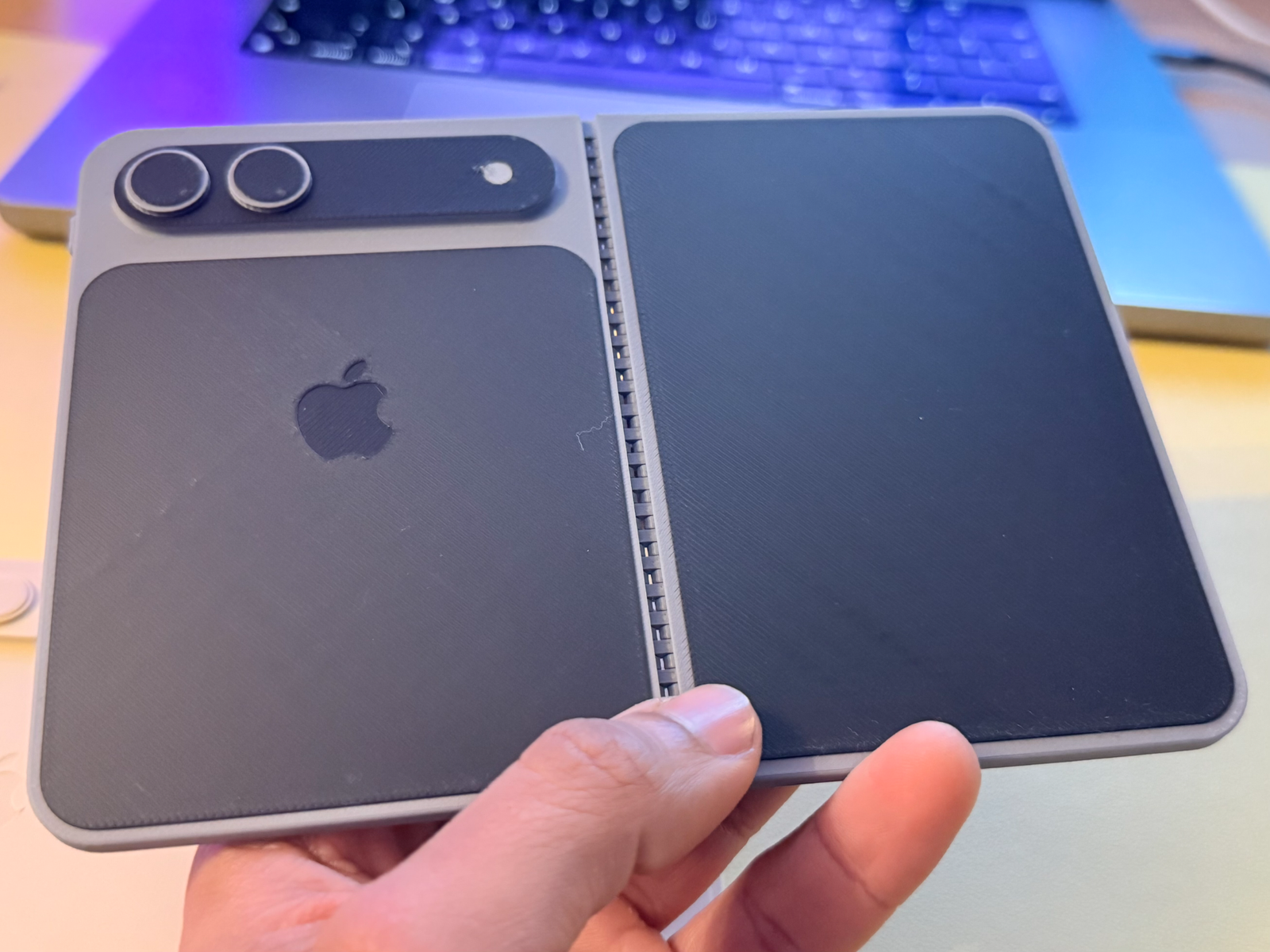
The physical model appeared on CNTN News, shared by a user known as Giovanni Romano. According to the creator, the dummy was built using leaked CAD files linked to Apple’s manufacturing process. Although the model does not claim to represent a final production unit - especially when it comes to the hinge - it provides a realistic sense of scale, thickness, and proportions.
Unlike glossy concept renders, a real-world dummy highlights how the device might feel in everyday use. That hands-on perspective makes the design choices far more revealing.
The most striking detail is the overall shape. When unfolded, the iPhone Fold strongly resembles an iPad mini in both size and aspect ratio. Apple appears to favor a wider, more balanced screen rather than an elongated display.
This design choice leads to a squarer form when the device is closed. While that breaks away from the slim, rectangular shape people associate with iPhones, it creates a much more spacious internal display once opened.
Most existing foldable phones, including those from Samsung and Google, rely on tall outer screens to preserve a classic phone feel when folded. Apple’s rumored strategy flips that logic.
By focusing on the unfolded experience, Apple may deliver a device that feels genuinely useful as a small tablet. The wider screen could improve multitasking, document viewing, gaming, and video playback—areas where current foldables still feel compromised.
Hardware is only part of the story. Apple’s real advantage may come from how iOS adapts to this new form factor. Developers could get early signals at WWDC, where Apple traditionally introduces tools that prepare apps for upcoming devices.
New layout frameworks, dynamic UI scaling, and improved multitasking controls could quietly lay the groundwork for the iPhone Fold months before its official reveal. Apple has taken this approach before, giving developers time to adjust ahead of major hardware changes.
If accurate, the iPhone Fold dummy suggests Apple is not simply joining the foldable market - it is redefining it on its own terms. Rather than copying existing designs, Apple seems focused on creating a product that feels purpose-built when unfolded, even if that means rethinking how a phone should look when closed.
As launch rumors continue to build, one thing becomes increasingly clear: Apple’s foldable iPhone could mark a significant shift in how smartphones evolve over the next decade.
Meanwhile, Apple is not alone in pushing foldable innovation forward. Samsung Galaxy Z Fold7 has already launched, bringing advanced AI features and a refined foldable design to the market. Samsung’s latest device highlights how quickly foldables are evolving and sets a clear benchmark for usability, performance, and on-device intelligence. You can read more about Samsung’s newest foldable and its AI-powered capabilities here - Samsung Galaxy Z Fold7 Launches with AI Power and a Stunning Foldable Design